4.1K
Downloads
33
Episodes
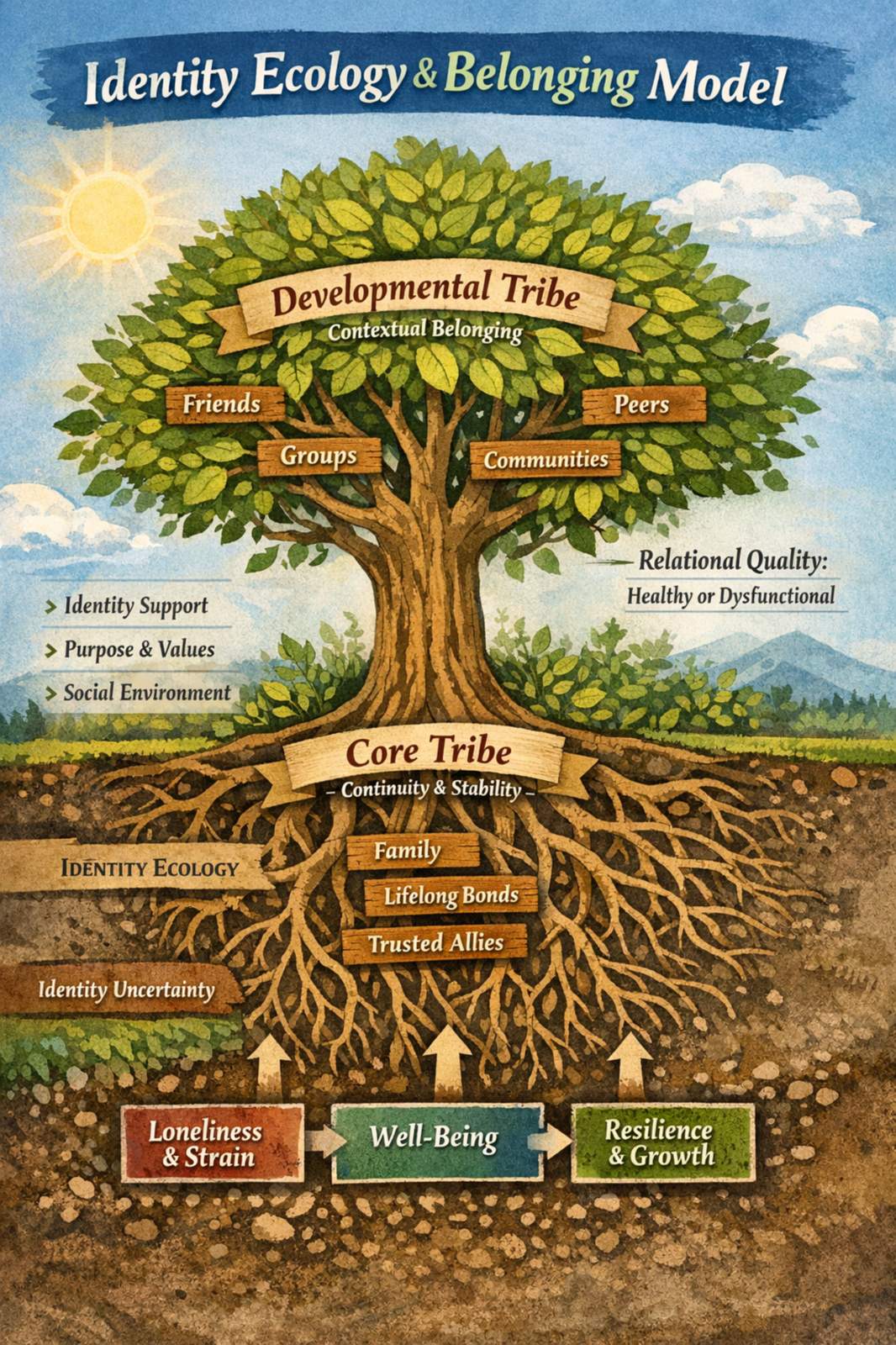
Dr. Curtis Peterson’s Identity Ecology & Belonging Frameworkexplores how human well-being and self-conception are shaped by a complex interplay of social environments and belief systems. The theory posits that individuals rely on relational anchors, categorized as lifelong "core tribes" or situational "developmental tribes," to maintain emotional stability during life transitions. Beyond personal relationships, the framework highlights symbolic anchors like culture and religion, which provide internal structure even when physical social supports are absent. A central innovation of this model is the Belonging Matrix, which distinguishes between the intensity of one's social connections and the actual health or quality of those relationships. By mapping these dynamics, the framework identifies how different belonging profiles—ranging from resilient to maladaptive—impact a person's resilience, loneliness, and overall sense of meaning. Ultimately, this ecological perspective offers a comprehensive method for measuring how integrated social and symbolic networks foster a coherent and stable identity throughout a person's life.
Episodes

Apr 16, 2026
Apr 16, 2026
22 min
This podcast is based on lectures by Dr. Curtis Peterson who explores the psychological dynamics of social contagion and the bystander effect regarding altruism and cooperative behavior. One primary study demonstrates that generosity is contagious, showing that while receiving help encourages individuals to "pay it forward," simply observing others help can sometimes decrease personal initiative due to a perceived lack of need. Other research examines the implicit bystander effect, finding that even the mental image of a crowd can subconsciously reduce a person's willingness to assist others. Additionally, the sources highlight a reversal of the bystander effect in specific contexts where a task requires a collective group effort rather than a single actor. In these interdependent scenarios, the presence of others actually increases helping intentions because individuals view their participation as a rational and necessary part of a shared goal. Together, these findings suggest that human kindness is influenced by a complex interplay of normative obligations, environmental cues, and logical assessments of utility.
Thank you for listening to this podcast which is hosted and directed by Dr. Curtis Peterson and Inspiring Lives LLC. Many of Dr. Peterson's podcast are developed using AI, however, all content is created, reviewed, and approved by Dr. Curtis Peterson. Many of the podcasts are based on his 16 plus years of lecturing at colleges and universities nationwide, and over 30 years of experience working in social science and social services field.
No comments yet. Be the first to say something!