3.9K
Downloads
22
Episodes
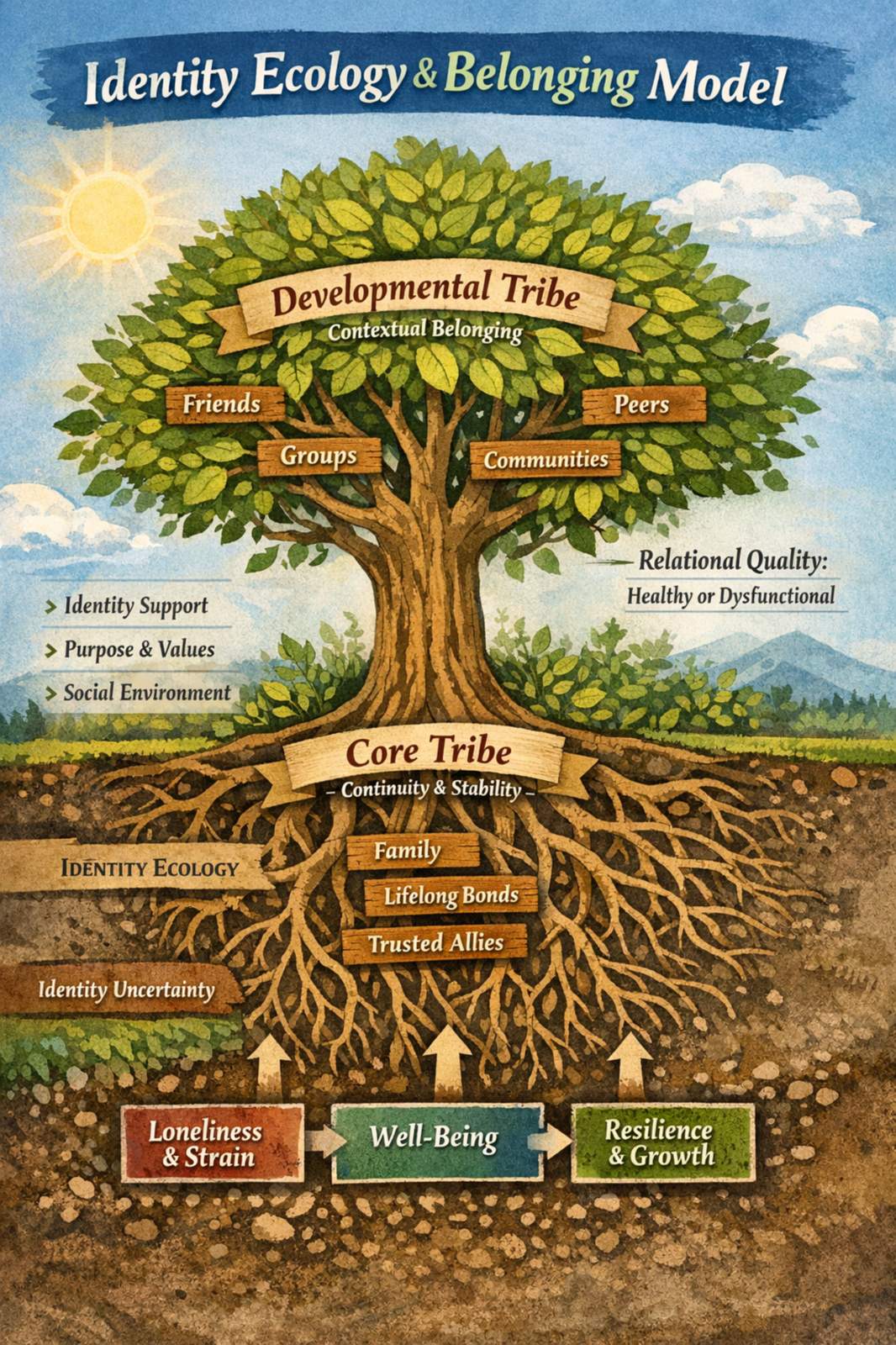
Dr. Curtis Peterson’s Identity Ecology & Belonging Frameworkexplores how human well-being and self-conception are shaped by a complex interplay of social environments and belief systems. The theory posits that individuals rely on relational anchors, categorized as lifelong "core tribes" or situational "developmental tribes," to maintain emotional stability during life transitions. Beyond personal relationships, the framework highlights symbolic anchors like culture and religion, which provide internal structure even when physical social supports are absent. A central innovation of this model is the Belonging Matrix, which distinguishes between the intensity of one's social connections and the actual health or quality of those relationships. By mapping these dynamics, the framework identifies how different belonging profiles—ranging from resilient to maladaptive—impact a person's resilience, loneliness, and overall sense of meaning. Ultimately, this ecological perspective offers a comprehensive method for measuring how integrated social and symbolic networks foster a coherent and stable identity throughout a person's life.
Episodes

4 days ago
4 days ago
This Podcast is based on Dr. Curtis Peterson’s lecture explores the intricate biological and psychological foundations of human infancy and toddlerhood. It rejects the "miniature adult" myth, highlighting that 90% of brain developmentoccurs after birth through a reciprocal relationship between physical movement and neurological growth. Key concepts include neuroplasticity, where the brain optimizes its architecture through experience, and the role of mirror neurons in fostering social synchrony and empathy. The lecture also examines Attachment Theory, illustrating how consistent caregiving creates internal blueprints that influence emotional health throughout life. Furthermore, it details how toxic stress and severe neglect can fracture these developmental pathways, potentially leading to long-term behavioral disorders. Ultimately, the source emphasizes that while biology provides the blueprint, the environment and responsive caregiving are the primary architects of a child's future cognitive and social success.
No comments yet. Be the first to say something!