3.8K
Downloads
21
Episodes
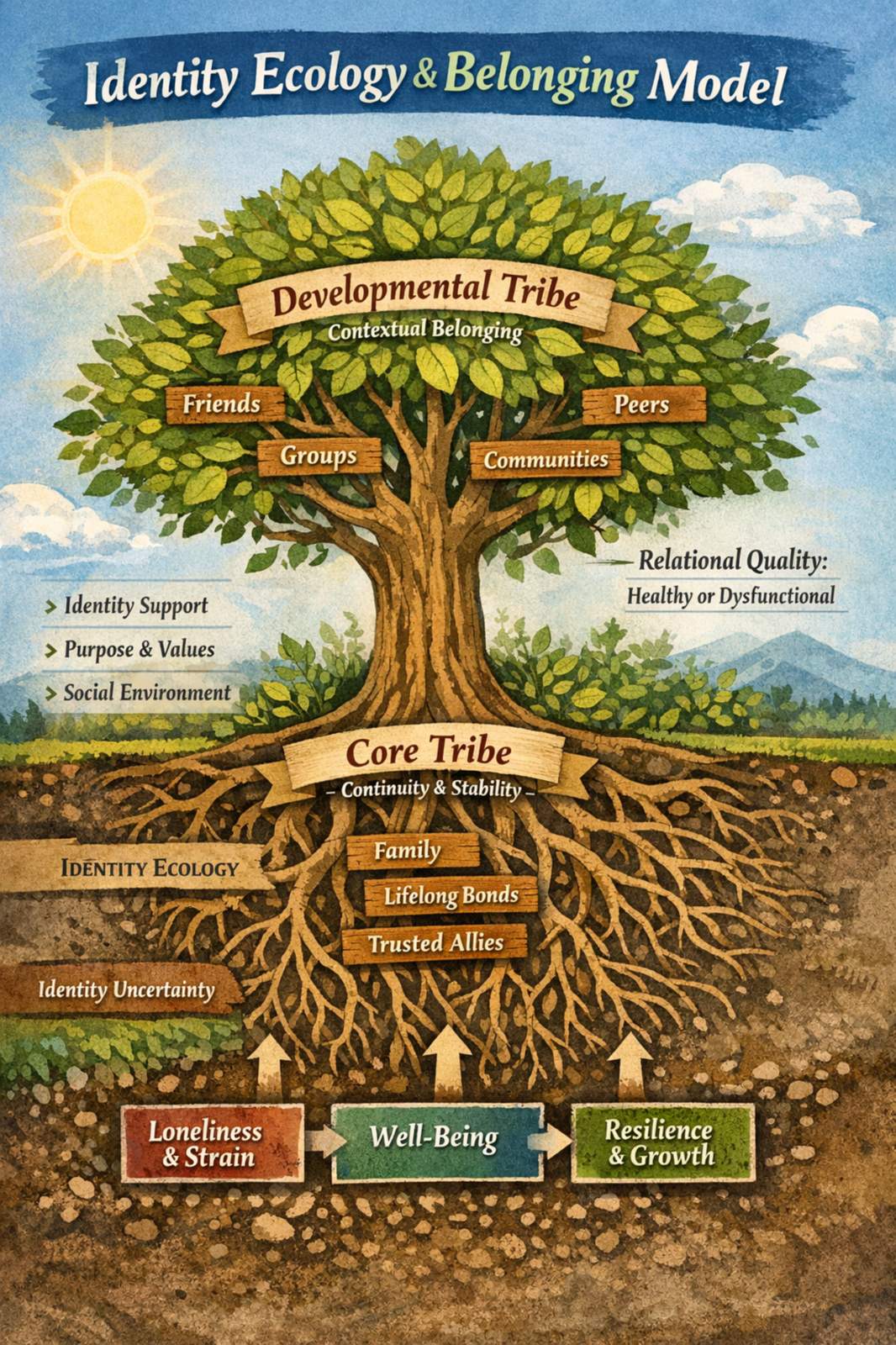
Dr. Curtis Peterson’s Identity Ecology & Belonging Frameworkexplores how human well-being and self-conception are shaped by a complex interplay of social environments and belief systems. The theory posits that individuals rely on relational anchors, categorized as lifelong "core tribes" or situational "developmental tribes," to maintain emotional stability during life transitions. Beyond personal relationships, the framework highlights symbolic anchors like culture and religion, which provide internal structure even when physical social supports are absent. A central innovation of this model is the Belonging Matrix, which distinguishes between the intensity of one's social connections and the actual health or quality of those relationships. By mapping these dynamics, the framework identifies how different belonging profiles—ranging from resilient to maladaptive—impact a person's resilience, loneliness, and overall sense of meaning. Ultimately, this ecological perspective offers a comprehensive method for measuring how integrated social and symbolic networks foster a coherent and stable identity throughout a person's life.
Episodes

Monday Apr 27, 2026
Monday Apr 27, 2026
This podcast is based on lectures by Dr. Curtis Peterson and examines the field of applied cross-cultural psychology, focusing on how practitioners translate theoretical research into practical improvements for global health, education, and business. The authors emphasize that professional interventions must account for local cultural nuances, religious values, and systemic issues like corruption or poverty to be effective. Key topics include the management of acculturative stress for immigrants, the role of spirituality in medical recovery, and the influence of cultural norms on business negotiations and legal disputes. Furthermore, the text explores the ethical tensions between universal human rights and indigenous traditions, particularly regarding gender and childhood. Ultimately, the source argues that psychologists can serve as catalysts for social change by fostering intercultural sensitivity and navigating complex political landscapes.
No comments yet. Be the first to say something!